Of the eight candidates, Alexis Goldstein most closely aligns with progressive values on immigration, Palestine, economic justice, and education equity. She is the only major candidate with no corporate PAC money, no AIPAC ties, and a platform that explicitly calls for abolishing ICE. She was fired by DOGE for doing her job protecting consumer data — and turned it into a congressional campaign. In a crowded field where the two frontrunners (Delaney and Trone) split the establishment vote, a strong progressive turnout could put Goldstein over the top. Vote Goldstein on June 23.

Rights
No AIPAC
Rights
Equity
Justice
Backing
Alexis Goldstein grew up in New York, studied computer science, and went to work on Wall Street after college — an experience that radicalized her rather than enriched her. After leaving finance, she became a prominent voice in the Occupy Wall Street movement and spent years as a financial reform advocate, testifying in the Senate Banking Committee and pushing for stronger consumer protection regulations. She later joined the Consumer Financial Protection Bureau as a program manager focused on financial data security.
In January 2025, DOGE officials arrived at CFPB headquarters. Goldstein encountered them in the basement — she had just dropped her toddler at daycare and was pushing an empty stroller. She noticed unbadged strangers accessing CFPB equipment and documented what she saw. For this, she was placed on administrative leave. On February 11, 2026 she was fired — one week before her contract would have expired anyway. On February 18, she announced her congressional run on Democracy Now!, becoming one of the most compelling origin stories of the 2026 cycle.
Her campaign slogan cuts through the noise: "Build libraries, not ICE jails. Fund schools, not data centers."
- Only candidate calling to abolish ICE outright
- No corporate PAC money — fully grassroots funded via ActBlue
- Literally fired by DOGE for protecting consumer data
- Testified before Senate Banking Committee on financial reform
- Wall Street background gives her unique credibility to critique it
- Warned AI data center boom mirrors 2008 financial crisis risk
- Emerged from Occupy Wall Street — not a career politician
- Announced candidacy on Democracy Now! — signals who she answers to
- No prior electoral experience — untested as a candidate
- Significantly outgunned financially vs Delaney and Trone
- Long shot in crowded 8-person primary (plurality wins)
- Limited public record specifically on Israel/Palestine positions
- No endorsements from elected officials yet
- Name recognition much lower than the two frontrunners
Rights
No AIPAC
Rights
Equity
Justice
Backing
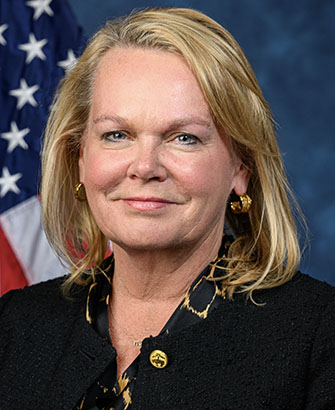
McClain Delaney grew up in Buhl, Idaho as the daughter of a potato farmer. She earned a JD from Georgetown, where she met her husband former Congressman John Delaney, who held this very seat from 2013 to 2019. She built a 30+ year career in communications law, served as Deputy Assistant Secretary for Communications in Biden's Commerce Department, and was Washington Director of Common Sense Media. She was elected in 2024 with 53% of the vote — Maryland's 6th is a competitive district and her win was not trivial.
Her freshman term has been defined by two contradictions: she has been a vocal critic of Trump on Venezuela strikes, the Iran war, and executive overreach — even calling for impeachment proceedings — while simultaneously being the only Maryland Democrat to vote for the Laken Riley Act, one of the most cruel immigration laws in recent history. She has since admitted she regrets the vote. The damage, however, is done.
She is also the wealthiest member of Maryland's congressional delegation according to the Baltimore Sun, with disclosure forms listing three significant real estate holdings. This primary is shaping up to be one of the most expensive House primaries in the country.
- Vocal critic of Trump on Iran war, Venezuela strikes, executive overreach
- Called for impeachment proceedings over Trump's Venezuela strikes (Jan 2026)
- Toured ICE detention facilities and described conditions as "deeply disturbing"
- Testified in support of bill banning detention centers in non-purpose-built facilities
- Introduced Rural Child Care Facility Expansion Act (April 2026)
- Introduced rural broadband legislation — relevant for her district's rural areas
- Supported Ukraine aid and criticized Trump's pro-Russia framing
- Strong endorsements: Gov. Moore, Sen. Van Hollen, Rep. Pelosi
- Pro-choice, supports codifying Roe v. Wade, opposes gender-affirming care bans
- 99% voting attendance rate (missed only 8 of 470 roll calls)
- Voted for the Laken Riley Act — the only Maryland Democrat to do so
- AIPAC bundled contributions: $68,009 in Q1 2026 alone
- Voted to sanction the ICC for issuing arrest warrants against Netanyahu
- Opposes conditioning US military aid to Israel
- Opposed immediate Gaza ceasefire
- Wealthiest member of Maryland's congressional delegation — wealth disconnect
- Lost bid for freshman class president (lost 23–10 to Rep. Ansari)
- Issued cease-and-desist against Trone campaign in April 2026 — signals bitter race
- Her own district is one of the most diverse in Maryland — the Laken Riley vote is politically inexplicable
She voted for a law that has put thousands of legal immigrants in detention without due process — then toured those same detention facilities and called conditions "deeply disturbing." She helped fill them and then expressed horror at what she found. In December 2025, she told the Baltimore Banner she regretted the vote, saying she wasn't "totally focused" on the due-process provision. A federal judge has since called enforcement of the law an "unconstitutional conspiracy" violating the First Amendment. The vote remains the defining failure of her freshman term.

Rights
No AIPAC
Rights
Equity
Justice
Backing
David Trone is the billionaire co-founder of Total Wine & More, the largest private wine and spirits retailer in the US. He held the MD-6 seat from 2019 to 2025, during which time he endorsed McClain Delaney as his successor, helped her campaign, and celebrated her 2024 victory. He then ran for Senate, lost the Democratic primary to Angela Alsobrooks by more than 10 points despite spending $62 million of his own money — one of the most expensive self-funded Senate losses in history.
Having lost the Senate race, he announced in December 2025 that he wants the House seat back. He is now running against the woman he endorsed, positioning himself as the progressive alternative and attacking her on the Laken Riley Act. This is audacious given that he himself voted to fund ICE during his tenure in the same seat. Politico described this primary as a race between "two of the wealthiest members of Congress in recent history."
His personal AIPAC giving is disqualifying for progressive voters — he is a "minyan" level donor, having personally pledged at least $100,000 to AIPAC. He is not just a recipient of AIPAC money — he is one of their major financial backers within the Democratic Party.
- Voted twice to impeach Donald Trump
- Personally funded a women's health clinic in Allegany County after West Virginia banned abortion — concrete action, not just rhetoric
- Strong record on mental health legislation during his tenure
- Has resources to compete in an expensive primary and general
- Long district relationships built over six years as its congressman
- Supported codifying Roe v. Wade
- Backed Ukraine aid and NATO commitments
- Personal AIPAC "minyan" donor — $100,000+ pledged personally
- Voted to fund ICE during his own tenure — now attacks Delaney for Laken Riley
- Endorsed Delaney as his successor, helped her win, is now running against her
- Spent $62 million of own money to lose Senate primary — questionable judgment
- Self-funding billionaire — accountable to no donors but also to no communities
- His progressive positioning in this race is strategically motivated, not principled
- History of workplace discrimination lawsuits against Total Wine
In 2024, Trone said McClain Delaney was the right person for this seat. He endorsed her, campaigned for her, and celebrated her victory. Then he lost $62 million in a Senate race and decided he wanted the House seat back. He is now attacking the candidate he created, on issues where his own record is equally compromised. This is not a principled primary challenge — it is a billionaire who lost one race trying to win a different one.
Rights
No AIPAC
Rights
Equity
Justice
Kiambo "Bo" White is a labor organizer running in MD-6 for the second consecutive cycle — he also ran in the 2024 Democratic primary. His background in labor organizing places him firmly in the working-class and progressive tradition, with natural alignment with immigrant worker communities who are disproportionately represented in labor organizing contexts. His campaign is based in Frederick County.
White has limited public record compared to the major candidates, making full issue assessment difficult. However, his labor organizing background is a meaningful signal — organizers who work with immigrant communities tend to have much stronger instincts on immigration rights than career politicians who read polls.
If Goldstein were not in this race, White would be worth a much closer look. As it stands, his viability is low in a crowded primary, and progressive votes are better consolidated behind Goldstein.
- Genuine labor organizing background — accountable to workers, not donors
- Two consecutive primary campaigns shows commitment, not opportunism
- Labor organizers typically have strong instincts on immigrant worker rights
- Grassroots candidacy — no corporate or AIPAC ties identified
- Represents communities often overlooked by the party establishment
- Very limited public record — hard to assess specific positions
- Palestine position unknown — a dealbreaker issue for many progressive voters
- No significant fundraising or endorsements identified
- Lost 2024 primary — name recognition still very low in the district
- With Goldstein in the race, progressive vote is already well-represented
Rights
No AIPAC
Rights
Equity
Justice
Ethan Wechtaluk was born in Lincoln, Nebraska, earned a bachelor's from Virginia Tech (2010) and a graduate degree from Penn State (2014). He is a survivor of the 2007 Virginia Tech mass shooting — an experience that shapes his advocacy on gun safety and government accountability. His career has been in consulting for federal agencies on service delivery.
He is the only minor candidate to have completed Ballotpedia's Candidate Connection survey, which gives us some insight into his platform. He describes himself as "a lifelong fighter for what matters" and says he's running because the district deserves someone who "won't back down from tough fights — whether it's protecting democracy, defending reproductive freedom, or tackling the climate crisis." He is based in Frederick County (Clarksburg).
His platform is broadly progressive on domestic issues but there is no public record on immigration rights or Palestine specifically.
- Virginia Tech shooting survivor — personal authority on gun violence and government failure
- Federal agency consulting background gives him policy implementation insight
- Explicitly supports reproductive freedom and democracy protection
- Completed the Ballotpedia survey — more transparency than most minor candidates
- Commits to climate action and the climate crisis as a central issue
- No public positions found on immigration rights or Palestine
- Very limited name recognition, fundraising, or endorsements
- Not viable in a crowded primary with two well-funded frontrunners
- No prior electoral experience
Rights
No AIPAC
Rights
Equity
Justice
George Gluck was born in Czechoslovakia and has lived in Rockville for decades. He holds degrees in mathematics from Brooklyn College, applied mathematics from Johns Hopkins, and computer management from George Washington University — and has worked as a mathematician and software engineer. He serves as social action chair of Kol Shalom Congregation in Rockville and as a Montgomery County election judge.
Gluck has been running for this seat — or nearby seats — since at least 2018, including as a Green Party candidate in the 2020 general election, and in the 2022 and 2024 Democratic primaries. He is famous for his extremely lean campaigns: he once declared his entire campaign budget was $400. He has never come close to winning but has never stopped running either.
He is genuinely progressive, wants to join the House Progressive Caucus, and would be a solid vote on virtually every issue progressive voters care about. He simply cannot win, and in a crowded primary where Goldstein needs every progressive vote, a vote for Gluck is effectively a vote wasted.
- Genuinely progressive platform — money out of politics, wage inequality, climate action
- Would join the House Progressive Caucus
- No AIPAC money, no corporate money — he spends $400 on campaigns
- Deeply rooted in Rockville and Montgomery County community
- Serves as election judge — commitment to democratic process
- Synagogue social action chair — faith-rooted advocacy
- Supported Green New Deal and universal healthcare
- Has never won a primary in six+ campaigns
- $400 campaign budget — zero chance of competing at any level
- No endorsements, no infrastructure, no fundraising
- A vote for Gluck is a protest vote — not a winning vote
- Progressive voters need to consolidate behind Goldstein in a crowded field
Rights
No AIPAC
Rights
Equity
Justice
Daniel Krakower is an attorney who has declared his candidacy for MD-6 but has the least publicly available information of any candidate in the race. He has not completed Ballotpedia's Candidate Connection survey, has no significant endorsements or fundraising reported, and has made very little media presence.
Without a public record on key issues — immigration, Palestine, women's rights, economic justice — it is impossible to make a meaningful assessment of his candidacy for progressive voters. His legal background could be an asset in Congress, but the absence of public positioning is itself a signal that this is not a serious campaign.
- Legal background could be useful in Congress
- No AIPAC ties identified
- Virtually no public record on any issue
- Has not completed any public candidate surveys
- No endorsements, no fundraising, no media presence
- Cannot be assessed — which is itself a problem for voters
Rights
No AIPAC
Rights
Equity
Justice
A. Mark Wilks owns a neighborhood grocery store in the district and is running in MD-6 for the second time, having also run in the 2024 Democratic primary. His small business background — particularly in food retail — gives him a ground-level understanding of supply chain issues, community economic health, and the daily realities of working-class constituents.
Like Kiambo White, Wilks represents the kind of community-rooted candidate who often brings perspectives missing from Congress. Unlike career politicians, he knows what it means to serve a neighborhood directly. However, without a public record on progressive policy issues, voters cannot make an informed assessment of where he stands on the issues that matter most.
- Small business owner — community-rooted, not donor-class
- Two campaigns shows genuine commitment to public service
- Grocery retail gives ground-level insight on food security and economic issues
- No AIPAC ties identified
- No public positions found on immigration, Palestine, or key progressive issues
- Limited fundraising and endorsements
- Lost 2024 primary — name recognition remains very low
- Not viable in a crowded race with two well-funded frontrunners
This voter guide reflects issue positions based on publicly available statements, voting records, campaign materials, Ballotpedia survey responses, Wikipedia, GovTrack, Congress.gov, OpenSecrets, and news reporting as of April 30, 2026. Scores and verdicts represent the author's progressive assessment and should not be taken as objective ratings. Research collated by T. Denoyo with the assistance of Claude (Anthropic). Always verify candidate positions directly at their campaign sites before voting. Primary: June 23, 2026 · Early voting: June 11–18.